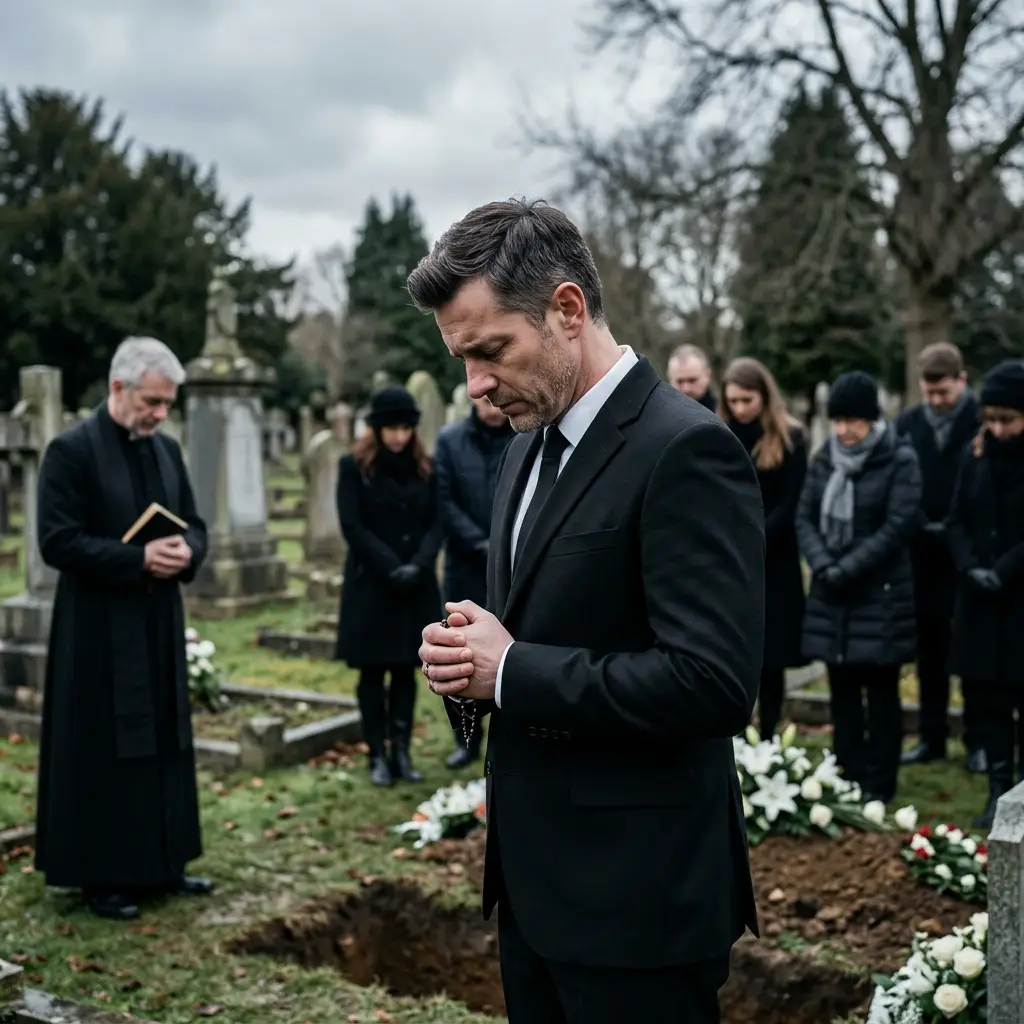
There comes a point in life—often in your 40s, 50s, and beyond—when death stops being something distant and abstract and becomes something real and personal. It begins to touch your world more frequently. A parent passes. A friend is suddenly gone. A public figure you grew up admiring dies, and it hits harder than expected. These losses don’t just bring grief—they bring reflection, perspective, and sometimes a quiet realization of your own mortality.
This stage of life can feel like a shift. The people who once seemed permanent begin to leave. The cultural icons who shaped your youth fade away. Even peers—people your own age—start to appear in obituaries. It can be unsettling, even disorienting. But it is also part of a deeply human experience, one that, while painful, can reshape how you live moving forward.
Grief is rarely simple. When you lose a family member, the pain is often layered with memories, shared history, and the roles they played in your life. A parent might represent guidance and security. A sibling might represent shared identity. Losing them can feel like losing a piece of yourself. It’s not just about their absence—it’s about the space they leave behind in your daily life and your sense of who you are.
When it comes to idols or public figures, the grief can feel surprising, even confusing. You may not have known them personally, yet their influence was real. They were part of your soundtrack, your inspiration, your worldview. Their work may have carried you through certain phases of life. When they pass, it can feel like a piece of your past is gone with them. This kind of grief is valid. It speaks to the power of connection, even when it’s indirect.
Losing peers can be the most jarring of all. There’s something uniquely unsettling about seeing someone your own age pass away. It removes the illusion that “there’s still plenty of time.” It can trigger questions you may have avoided: Am I living the life I want? Am I taking care of my health? What really matters? These thoughts can be heavy, but they can also be clarifying.
One of the most important things to understand about grief is that there is no correct way to experience it. Some people cry openly. Others become quiet and reflective. Some feel waves of emotion, while others feel numb. All of these responses are normal. Grief doesn’t follow a straight line, and it doesn’t operate on a schedule. It comes in moments—sometimes expected, sometimes not.
Allowing yourself to feel what you feel is essential. Trying to suppress grief often prolongs it or causes it to surface in other ways. If you need to sit with the sadness, do it. If you need to talk, reach out to someone you trust. If you need time alone, take it. The key is not to avoid the experience but to move through it at your own pace.
Talking about the person you lost can also be a powerful way to process grief. Share stories. Remember the good moments. Laugh when you can. Keeping their memory alive in conversation can transform grief from something purely painful into something that also carries warmth and meaning.
At the same time, it’s important to take care of yourself physically and mentally. Grief can be exhausting. It can affect your sleep, your appetite, and your energy levels. Simple things—getting rest, staying hydrated, eating regularly—become more important during these times. They provide a foundation that helps you handle the emotional weight.
Another helpful approach is to find ways to honor the person you lost. This could be through a small ritual, continuing a tradition they loved, or even living out values they embodied. These acts create a sense of connection that doesn’t end with their physical presence. They remind you that while the relationship has changed, it hasn’t disappeared entirely.
For many people, experiencing loss also leads to a shift in priorities. Things that once seemed urgent may feel less important. Relationships often take on greater significance. There may be a stronger desire to spend time with loved ones, to express appreciation, or to pursue things that bring genuine fulfillment. In this way, loss can serve as a difficult but powerful teacher.
It’s also worth acknowledging that grief can resurface over time. Anniversaries, birthdays, or even random moments can bring back emotions you thought had settled. This doesn’t mean you haven’t healed—it means the connection you had was meaningful. Over time, the intensity usually softens, but the memory remains.
When dealing with multiple losses—family, idols, and peers—it can feel like the weight is compounding. In these moments, it becomes especially important not to isolate yourself. Even if you don’t feel like talking, being around others can provide a sense of grounding. You’re not meant to carry this alone.
There is also a quiet opportunity within loss, though it may not feel that way at first. It invites reflection. It asks you to consider how you are living, what you value, and what kind of legacy you want to leave behind. These are not easy questions, but they are meaningful ones.
In time, grief changes. It doesn’t disappear, but it evolves. What begins as sharp pain often becomes a softer presence—a mixture of remembrance, gratitude, and occasional sadness. You begin to carry the people you’ve lost in a different way, one that allows you to continue moving forward while still holding onto what mattered.
Death is one of the few experiences every person will face, yet it always feels personal when it reaches your world. There is no way to fully prepare for it, and there is no way to completely avoid the pain it brings. But there is a way to move through it—with honesty, with support, and with a willingness to let it shape you in meaningful ways.
In the end, dealing with loss is not about “getting over it.” It’s about learning how to live with it—how to carry the memories, the lessons, and the love forward into the rest of your life.