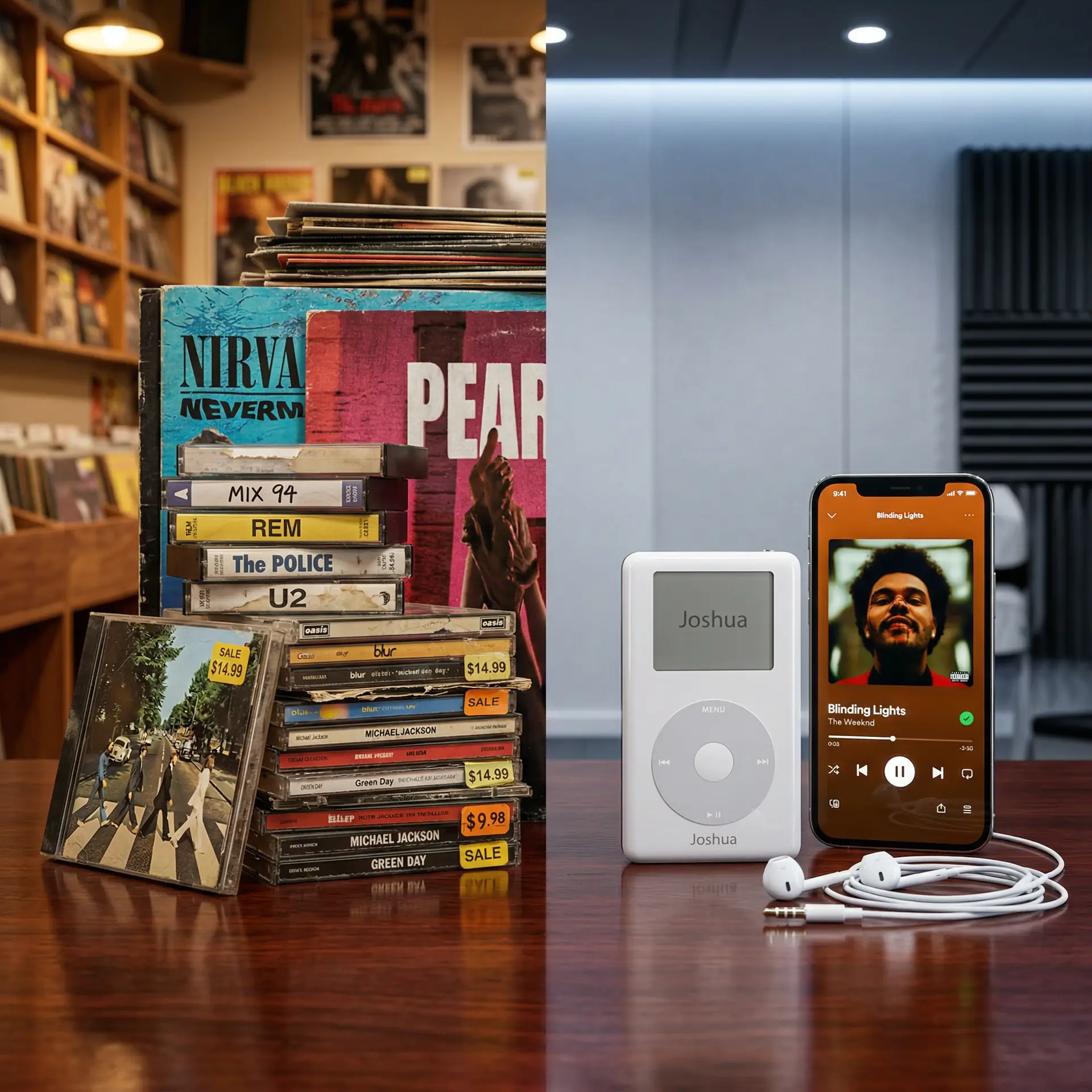
Music has always been more than just entertainment—it’s a reflection of identity, culture, and generational influence. For Generation X and Millennials, music marked defining moments in their lives, from cassette tapes and CDs to digital downloads and streaming. But when it comes to the top-selling songs that shaped each generation, the differences are striking—and revealing.
Gen X grew up in an era where music sales were driven by physical formats—vinyl, cassettes, and especially CDs. Buying music required intention. You went to a store, picked out an album or single, and owned it. Millennials, on the other hand, came of age during the digital revolution—downloads, iTunes, and eventually streaming platforms like Spotify. This shift fundamentally changed how music was consumed, measured, and valued.
Below is a look at ten of the most impactful, high-selling songs tied to each generation—not just in raw numbers, but in cultural significance and influence.
Gen X: The Era of Physical Sales and Global Anthems


1. I Will Always Love You – Whitney Houston
A powerhouse ballad that became one of the best-selling singles of all time, dominating the early ’90s.
2. Candle in the Wind 1997 – Elton John
A tribute to Princess Diana that became the best-selling physical single in history.
3. Everything I Do (I Do It for You) – Bryan Adams
A chart-dominating love song that defined early ’90s radio.
4. My Heart Will Go On – Celine Dion
A global hit tied to the massive success of Titanic, embedding itself in pop culture history.
5. Take On Me – A-ha
An iconic ‘80s track with one of the most memorable music videos ever created.
What defines Gen X music sales?
- Massive physical sales (millions of copies per single)
- Fewer releases, but longer chart dominance
- Strong emotional and cinematic connections
- Radio and MTV as primary discovery platforms
Millennials: The Digital Explosion and Streaming Era


6. Shape of You – Ed Sheeran
One of the most streamed songs ever, redefining what “sales” means in the streaming age.
7. Despacito – Luis Fonsi
A global phenomenon that broke language barriers and streaming records.
8. Rolling in the Deep – Adele
A rare crossover hit that thrived in both digital downloads and traditional sales.
9. Happy – Pharrell Williams
An upbeat anthem that became a global cultural staple.
10. Somebody That I Used to Know – Gotye
A minimalist track that went viral and dominated charts worldwide.
What defines Millennial music sales?
- Digital downloads and streaming dominance
- Viral growth through social media
- Global accessibility and instant reach
- Shorter attention cycles, faster chart turnover
Key Differences Between Gen X and Millennial Music Success
The contrast between these two generations isn’t just about songs—it’s about how music itself evolved.
1. Ownership vs Access
Gen X bought music—they owned collections. Millennials stream music—they access everything instantly.
2. Scarcity vs Abundance
Gen X had limited options, which made hits feel bigger and more enduring. Millennials live in a world of endless content, where virality can create overnight sensations.
3. Longevity vs Speed
Gen X hits often stayed on charts for months or even years. Millennial hits can rise and fall quickly, driven by trends and algorithms.
4. Emotional Impact vs Algorithmic Reach
While both generations connect emotionally to music, Gen X songs often built their success through radio and word-of-mouth. Millennial hits often gain traction through playlists, shares, and platform algorithms.
So, Which Generation Wins?
If you measure by pure units sold, Gen X dominates. Physical sales numbers from the ’80s and ’90s are staggering and unlikely to ever be matched again.
If you measure by global reach and total listens, Millennials take the lead. Streaming has allowed songs to reach billions of plays across the world almost instantly.
But the real takeaway isn’t about which is better—it’s about how each generation reflects a different era of music consumption.
Gen X represents a time when music felt tangible, intentional, and deeply personal. Millennials represent a world where music is limitless, immediate, and constantly evolving.
Both created iconic songs. Both shaped the industry. And together, they tell the story of how music transformed from something you owned… to something you experience everywhere, all the time.